
Start with what already has a time
List fixed commitments first: a shift, appointment, school pickup or opening time for a service you use. Include travel and preparation. An appointment at nine is not a single event if you need to leave an hour earlier or arrange care for someone else.
Put flexible tasks beside those commitments. Laundry, shopping or an ordinary check-in may have several possible times. Distinguishing flexible from fixed makes it easier to change the day without accidentally moving something that requires notice or permission.
If your schedule changes each week, use the latest confirmed information. Mark uncertain shifts or appointments as uncertain; do not build the rest of the routine around them as though they are settled.
Choose a regular activity that serves a purpose
A repeated activity can be something practical, such as checking tomorrow’s arrangements after dinner or putting necessary items together before sleep. Choose it because it prevents a problem you actually encounter.
For example, if you frequently discover missing paperwork at the door, a check the night before may help you identify the gap earlier. This is an editorial planning suggestion, not a claim that one habit treats a substance-use disorder. Keep existing clinical instructions and appointments in view when deciding what belongs in the routine.
Avoid adding an activity merely because a recovery routine is supposed to look a certain way. You do not need a morning exercise session, journal and group meeting every day unless those choices fit your needs and circumstances.
Plan the version for a disrupted day
Decide what remains necessary when energy, sleep or access changes. This is not simply a shorter version of everything. A missed bus may require contacting the appointment service; low energy may require a different food arrangement; a new symptom may require care.
Write the relevant alternative beside the task. “If the lift is unavailable, call the service before the appointment time” is more usable than “try harder to be on time.” Do not invent a backup that needs money or equipment you do not have.
If you live in a shared or temporary space, plan around what you can control. A portable place for papers may be feasible when reorganizing a whole room is not. Ask about shared access rather than assuming the kitchen or bathroom will be available at the time you prefer.
Leave unassigned time deliberately
A routine that fills every gap can make ordinary delays difficult to absorb. Consider how long tasks actually took last week and leave space around the ones that vary. Rest or an unscheduled evening does not have to be justified through a productivity target.
If substance-use urges are associated with a particular period, plan relevant support or an alternative activity for that period. Do not assume filling every hour removes the need to discuss persistent cravings or other care concerns.
Review the arrangement, not your worth
After trying the routine, identify what became easier and where the plan failed. Was the time unrealistic? Was a necessary resource unavailable? Did the task stop serving its purpose? Change the arrangement using that information.
If difficulties with stress, sleep or daily functioning persist, NIMH advises seeking professional support when distress interferes with life. A timetable cannot explain every health problem. Bring concrete examples of what is happening while keeping the routine flexible enough to reflect the care or practical changes you actually need.
Activities from this guide
Your checklist
Read the steps now. A free account lets you save your own checklist.
- 1. Choose one everyday anchor
- 2. Attach it to an existing part of the day
- 3. Name a smaller backup version
- 4. Keep or change it after trying it
About this guide
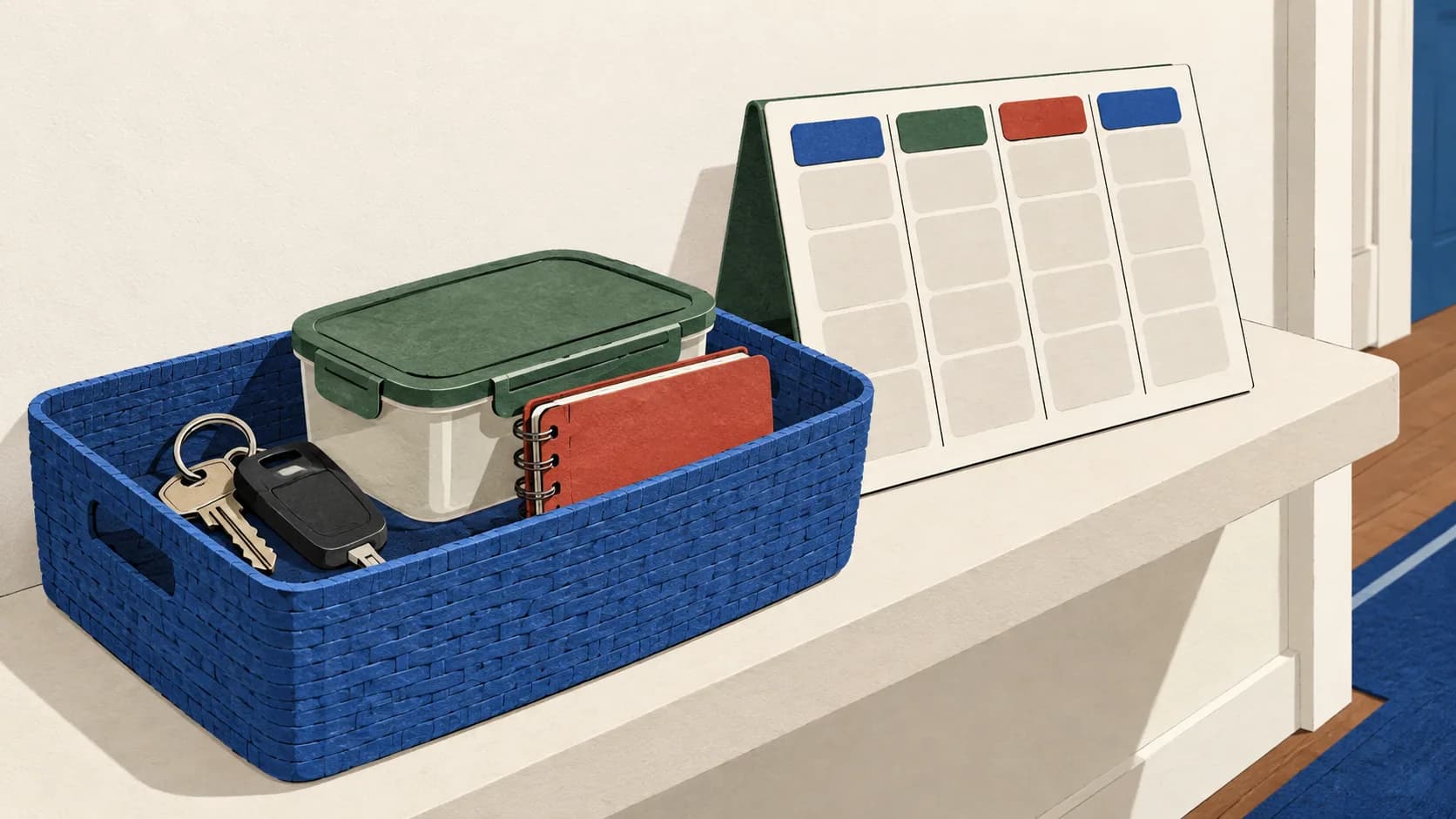
AI-generated editorial image; it does not depict a real person or event discussed in this guide.
Examples in this guide are illustrative, not reported experiences.
SoberSphere provides independent general information, not individual medical, legal or financial advice. No provider referral, affiliate arrangement or specialist review is claimed.