
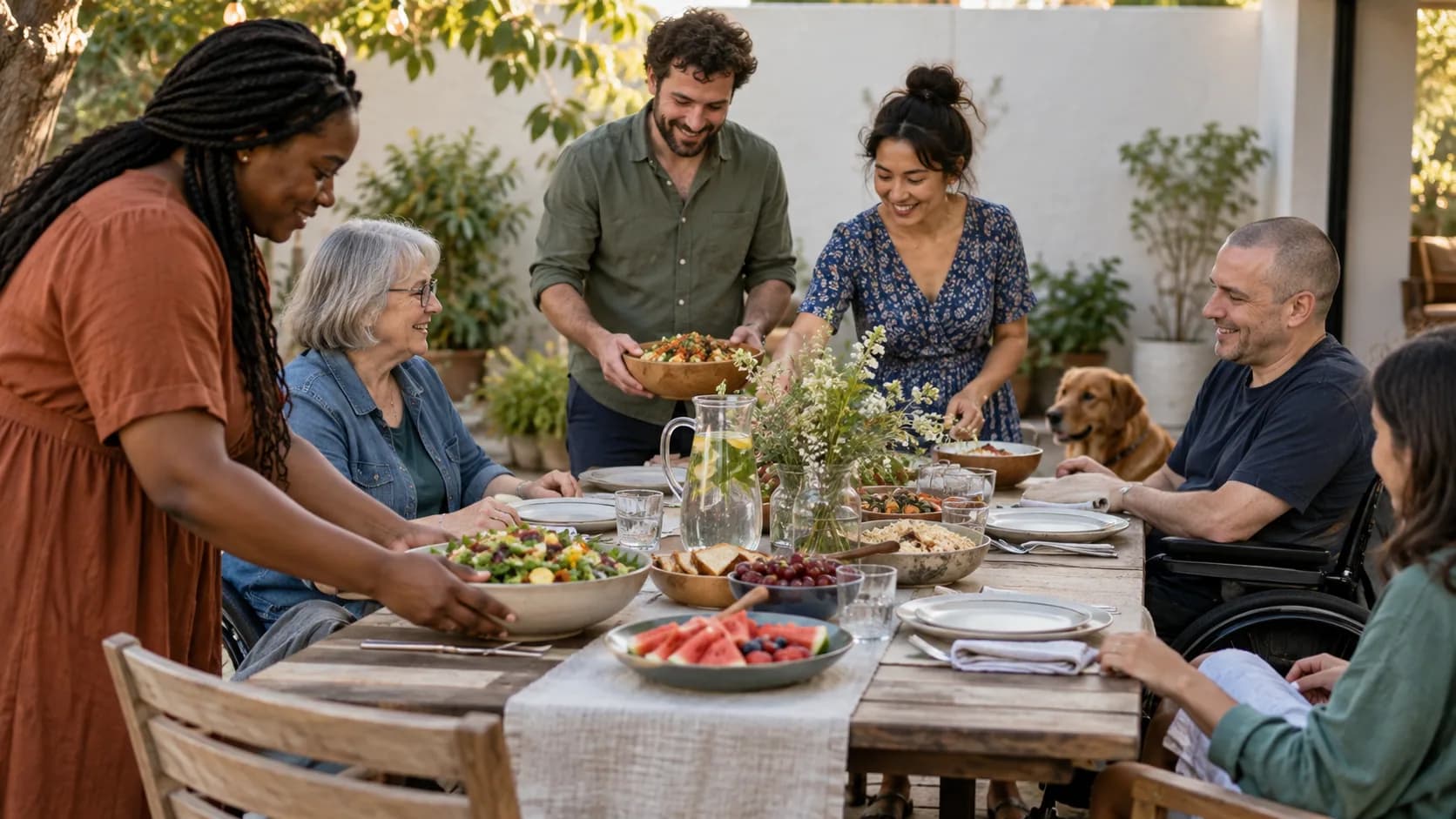
Decide what kind of gathering you are offering
Start with the activity and duration. A shared afternoon meal, short visit or game can have a clear purpose without relying on drinking. State whether alcohol or other substances will be present or whether you are asking guests not to bring them.
Use direct invitation wording: “This will be an alcohol-free lunch from one to three.” If you need a broader no-substances arrangement, say that rather than assuming everyone interprets “sober” in the same way. A clear description lets people decide whether the event fits them before they travel.
Do not explain the rule by identifying a particular guest’s history. Your hosting decision can stand on its own. If a guest has asked for a private accommodation, agree on what you can say to others without sharing the underlying reason.
Ask about needs before promising a menu
Find out whether guests have allergies, dietary requirements or practical difficulties with food. FDA explains why people with food allergies need to identify and avoid relevant ingredients. Keep packaging or ingredient information available and do not describe a dish as safe if you cannot verify what is in it or how it was prepared.
If you cannot meet a particular need, say so early and discuss an acceptable arrangement with the guest. Do not ask them to take a risk to avoid inconveniencing you. A potluck also needs information about ingredients; it does not remove the host’s need to communicate honestly.
Choose food that fits your equipment and available preparation time. FoodSafety.gov provides handling and storage guidance. Use the instructions relevant to the food rather than guessing whether a dish can remain out through a long gathering.
Offer ordinary choices without putting people on display
Make nonalcoholic drinks easy to identify and obtain. Water or another familiar option can be enough; guests do not need a special drink that imitates alcohol. If a beverage’s ingredients matter to someone, let them inspect the label or choose something else.
Do not ask why a guest declines a drink or encourage the group to applaud the choice. The same applies to food and activities. A person should be able to pass without making a public explanation.
If you plan a toast, game or ritual, consider how someone can participate without consuming a particular drink. Explain the option as part of the event, not as an exception announced for one person.
Check physical and financial access
Tell guests about steps, seating, toilets, noise, parking or transit where relevant. If you do not know whether a space meets a particular need, ask and check rather than saying it is accessible in general.
Be explicit about any shared cost. A request to bring food or pay for an activity can matter as much as a ticket price. You can keep a gathering smaller or simpler rather than relying on unspoken contributions. No guest should discover a required expense only after arriving.
Decide how you will handle a change
If someone brings something you asked them not to bring, restate the hosting arrangement without discussing another guest’s recovery. If behavior becomes unsafe, prioritize safety and appropriate help. Do not let an impaired person become the assumed ride home for others.
Give people room to leave at the announced time or earlier. When the event ends, a brief private check about a practical accommodation can help you plan next time. Ask what worked, rather than seeking reassurance that every part of the gathering was perfect.
About this guide
AI-generated editorial image; it does not depict a real person or event discussed in this guide.
Examples in this guide are illustrative, not reported experiences.
SoberSphere provides independent general information, not individual medical, legal or financial advice. No provider referral, affiliate arrangement or specialist review is claimed.