
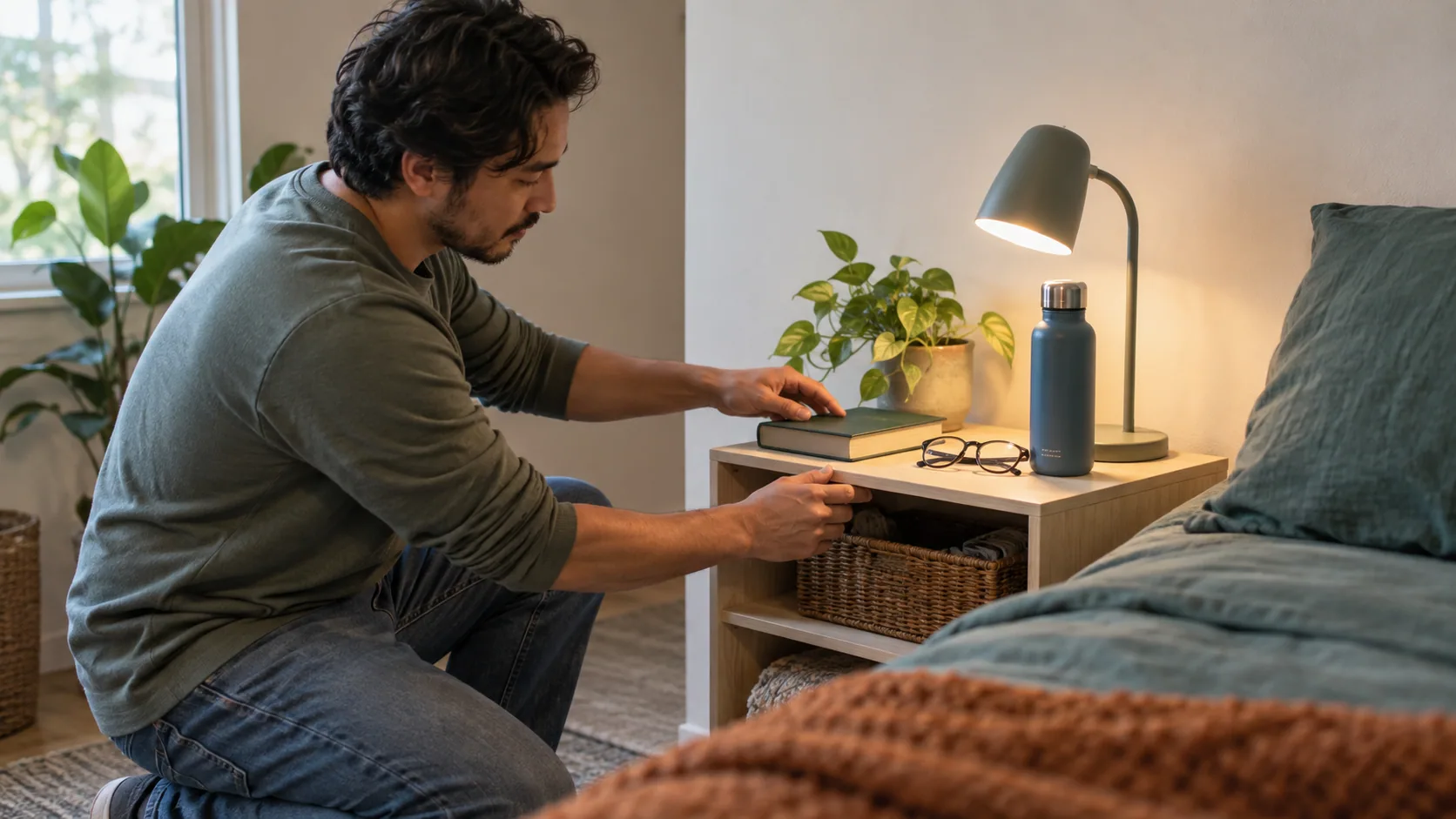
Define the task the space should support
Choose something concrete: finding essential papers, preparing food, reaching clothes or getting through a walkway. “Make the room nicer” can lead in many directions; “clear enough space to use this surface” tells you what needs to change.
Look at the point where the task becomes difficult. Are useful items out of reach? Is the surface occupied by things that belong elsewhere? Is there too little light? The answer determines whether the next action is moving something, reducing the number of items or asking for a repair.
If you share the area, agree on its use before rearranging other people’s belongings. A solution that works for one person but prevents another from using the space needs discussion.
Address hazards before appearance
CDC’s older-adult fall-prevention guidance includes removing trip hazards and improving lighting. Consider whether your chosen area contains a practical obstruction you can safely move. Keep access routes usable rather than moving the clutter from a table into a walkway.
Do not attempt electrical work, structural changes or a heavy move beyond your ability. If a repair or adaptation is needed, contact the relevant owner, maintenance service or qualified professional. An organizing task should not create a new hazard.
If your living situation is temporary or you cannot alter the room, focus on an arrangement that fits those limits. A portable set of essential items may be more realistic than installing storage.
Sort only what belongs to this task
Gather the items needed for the activity and identify what is blocking access. Put unrelated items in an appropriate place rather than beginning a full inventory of everything you own. If an item’s destination is unclear, keep that decision separate so it does not stop the whole task.
Do not discard documents, medicines or other people’s property simply because they look like clutter. Confirm what should be retained or handled through a specific process. If you cannot make the decision now, keep the item identifiable and out of the way safely.
Use an existing container if it suits the task. Buying a system before you know the items and space can leave you with more things to store.
Put frequently needed items where the task happens
Keep relevant materials together where you can reach them safely. For example, a paperwork area might hold the current letter, a pen and a note of the next action. It does not need every old document in view.
If privacy matters, choose storage accordingly. A convenient open tray may be unsuitable for sensitive records in a shared home. A closed container still needs to be kept somewhere appropriate; it is not a security guarantee.
Test the arrangement by using it
Carry out the ordinary task. Can you find what you need, use the area and put items away without a complicated sequence? If not, change the specific part that failed.
Notice maintenance effort. An arrangement requiring careful sorting after every use may not fit your energy or schedule. Fewer decisions and a clear place to return an item can be more workable than an elaborate visual system.
Leave the area usable when you stop. If more work remains, name the next practical issue rather than spreading the task across the room.
About this guide
AI-generated editorial image; it does not depict a real person or event discussed in this guide.
Examples in this guide are illustrative, not reported experiences.
SoberSphere provides independent general information, not individual medical, legal or financial advice. No provider referral, affiliate arrangement or specialist review is claimed.