
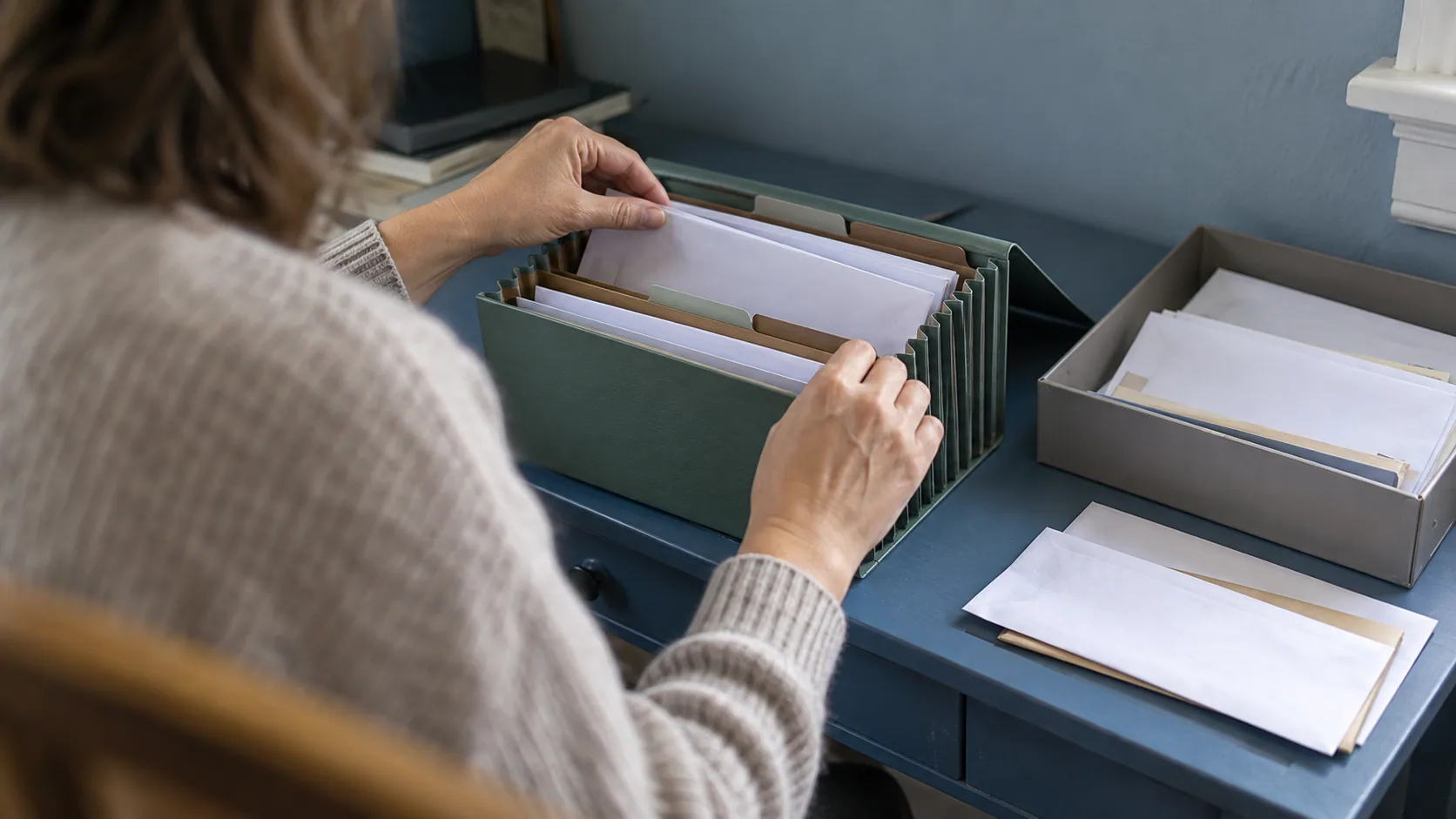
Choose a place you can maintain
Use a folder, envelope, notebook or secure digital location you can access. You do not need paid software or a complete filing system. If you share a device or living space, consider who could see the information.
Keep original legal notices and important records intact. If you make a digital copy, check that every page is readable and that you can retrieve it later. Do not discard originals just because a photograph exists.
If storing documents safely is difficult, ask a trusted service about practical options. Avoid giving someone broad account access simply because they are helping organize paperwork.
Gather the current material
Bring together recent bills, bank or payment records, income information, benefit notices and any collection or court papers. Include paper mail and messages in online accounts where you can access them safely.
Put urgent notices where they will be seen first. A court response date, shutoff warning or benefits deadline should not disappear into a general pile of statements.
Do not wait for every missing document before beginning. Write “request current statement” or “confirm balance” where information is incomplete.
Make a short working list
For each item, record the provider or agency, account reference, amount, date and next action. The action might be pay, verify, request assistance, send a document or obtain advice.
CFPB’s bill-calendar guidance can help make due dates visible. Keep the next action separate from the total balance; a large balance may have a routine payment while a small notice may require a prompt response.
Use only as much identifying information as the list needs. Store sensitive account details with the underlying document rather than copying them into every reminder.
Mark what is uncertain
A statement may be old, a payment may not have posted or an account name may be unfamiliar. Label the uncertainty instead of treating an estimate as confirmed debt.
For a collector’s notice, CFPB explains verification and communication options. Keep the notice and relevant dates while you investigate. Organization is not an instruction to acknowledge or pay an old disputed account.
If two documents conflict, keep both and note the question. That gives the provider or adviser the information needed to explain the difference.
Leave a record after each contact
Add the date, person or office contacted, answer received and next step. Keep written confirmations with the related item.
Use clear status words such as requested, submitted, approved or paid. They prevent an unfinished inquiry from looking resolved. When a new date is confirmed, update the working list and retain the original notice.
Review the folder when new mail arrives or income changes. The useful outcome is a current map of obligations and questions, not a spotless archive. It should make the next provider call or advice appointment easier to use.
Activities from this guide
Your checklist
Read the steps now. A free account lets you save your own checklist.
- 1. Create three headings
- 2. Gather one missing document
- 3. Write down one question to clarify
About this guide
AI-generated editorial image; it does not depict a real person or event discussed in this guide.
Examples in this guide are illustrative, not reported experiences.
SoberSphere provides independent general information, not individual medical, legal or financial advice. No provider referral, affiliate arrangement or specialist review is claimed.