
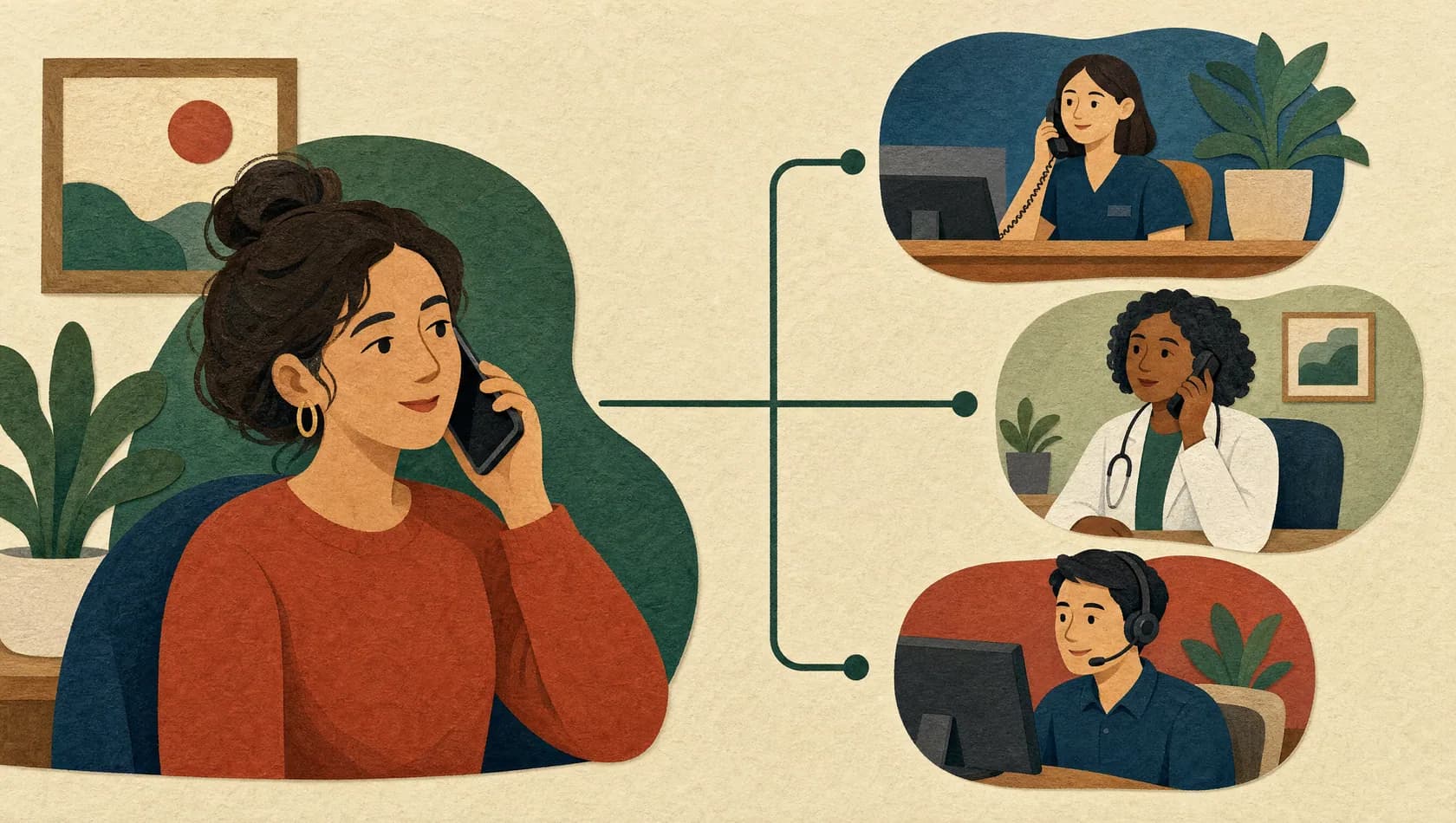
Different people answer different questions
An admissions coordinator or intake worker may take a first call. They can often explain the program's services, schedule an assessment, take insurance details and describe the next step. They may not be qualified to give medical advice.
A clinician, such as a nurse, counselor or doctor, can discuss clinical questions: withdrawal risk, medications, mental health or whether a level of care fits. Some programs have clinicians take first calls; others arrange a clinical conversation later.
A call service may answer on a program's behalf, for example after hours. The person may take your details and pass them on without being able to answer questions about the program.
An automated system or voice assistant may answer, route your call or take a message. It can be hard to tell at first. If you are not sure, ask.
Some numbers connect you to a marketing company or referral service rather than a program. That company may be paid to send callers to certain programs.
Ask at the start
You can say: “Before we go on, can I ask who I'm speaking with? Do you work for this program, or for a service that answers calls for it?”
Then ask whether they can answer your question: “I have a question about withdrawal. Can you answer that, or should I speak to a clinician?”
If you reach an automated system and want a person, ask for one or use the option to speak to staff. If there is none, ask when a person will call back and from what number.
Why it matters who is on the line
If you share medical details, you want them to reach someone who can act on them. If you ask whether a program can meet a particular need, the answer is more reliable from someone who knows the program. If you are told a program is right for you, it matters whether that comes from an assessment or from a sales conversation. Questions about the treatment a program provides, the kind NIDA suggests asking, need answers from someone who knows that program.
It also matters for privacy. Ask what happens to the information you give, whether the call is recorded and who the information will be shared with.
Watch for independent-sounding referral lines
Some websites and phone lines that look like neutral information services may be run or paid by treatment programs. A caller can be steered toward a program without being told why.
Texas addresses this directly. Texas Health and Safety Code chapter 164 says a treatment facility may not contact a potential patient to solicit a referral without disclosing that the person contacting them is affiliated with the facility. It also restricts facilities from generating leads through call centers or websites unless the terms are disclosed to the prospective patient. Other states have different rules.
Wherever you are, you can ask: “Are you paid by any program you might recommend?” and “Which program do you work for?”
When you need a clinician
If you have symptoms of withdrawal, are pregnant, take other medications or have a health condition that could affect treatment, ask to speak to a clinician before decisions are made. If the program cannot connect you, ask when a clinician will call and what you should do until then.
If symptoms are severe, such as a seizure, confusion or trouble breathing, do not wait for a callback. Call 911. If you are in crisis, call or text 988.
Keep a note of each call
Write down the date, the number you called, the name and role of the person you spoke to and who they work for. Note what they told you and what they will do next. If a call service or automated system takes a message, note when someone promised to call back.
That record helps you tell apart what a program said from what a call service or website told you, and it helps if you need to follow up.
If you are calling for someone else
The same questions apply. You may speak to several different people before anyone can talk about care. Ask who you are speaking to and what they can discuss, and remember that the program may need the person's consent before sharing details with you.
Activities from this guide
Your checklist
Read the steps now. A free account lets you save your own checklist.
- 1. Ask who you are speaking to
- 2. Ask for a clinician for medical questions
- 3. Note the name, role and employer of each contact
About this guide
AI-generated editorial image; it does not depict a real person or event discussed in this guide.
Examples in this guide are illustrative, not reported experiences.
SoberSphere provides independent general information, not individual medical, legal or financial advice. No provider referral, affiliate arrangement or specialist review is claimed.