
Check access before choosing recipes
List what you can use today: safe drinking water, a can opener, utensils, cooking equipment and dependable refrigeration. Include restrictions on shared kitchens or appliances. A room with a microwave available only at certain hours is different from a kitchen you can use whenever you need it.
Check the label before treating a food as ready to eat or safe at room temperature. Something shelf-stable before opening may require refrigeration afterward. A large container can be poor value if you cannot safely keep what remains.
FoodSafety.gov explains safe preparation and storage, including prompt refrigeration of perishables. Choose quantities and foods that fit those requirements. Do not use smell alone as a substitute for knowing whether food has been stored safely.
Count the gap in meals and money
Write down the days until your next confirmed food source. Note any meals already provided through work, school or another arrangement, but only if they are actually available to you. Then identify which meals still need food.
Count money available after obligations you cannot simply ignore. If you have benefits, check the usable balance and relevant purchase rules through the program. Keep transport costs separate so the shopping plan does not spend the money needed to reach the store or get home.
This is not a test of whether you can make a perfect menu. It is a way to see whether the resources cover the period at all. If they do not, name the shortfall rather than assuming more careful shopping will solve it.
Build around foods you will use
Look for familiar options that suit your needs, preparation access and any allergies or clinical dietary advice. A no-cook meal could combine ready-to-eat components in quantities you can finish safely. A microwave option must be suitable for that appliance and prepared according to its directions.
Compare the usable amount, not just the package size. A multipack may cost less per portion but require more cash than you have. A cheaper ingredient may need equipment, fuel or other ingredients that make the actual meal more expensive.
If you can cook, consider whether one ingredient can be used in more than one meal without requiring unsafe storage. Plan leftovers only when you have a safe way to cool, refrigerate and reheat them.
Ask food services about your real constraints
In the United States, USAGov lists emergency food routes, including local pantries, 211 and the National Hunger Hotline. These routes can help locate services; they do not guarantee a particular supply or delivery.
Before travelling, ask about opening hours, service area, required information and whether food is ready to eat or requires cooking. Say if you lack refrigeration or a can opener, or cannot carry a heavy box. If you have no phone, a library or service desk may be able to help locate the information in person.
Leave yourself a usable plan
Record where the next food will come from, when you can obtain it and which meals it covers. Separate confirmed arrangements from requests still awaiting an answer. If a source falls through, the list shows the uncovered meals you need help with.
After shopping or collecting food, revise the plan to match what you actually received. A workable week is built from available food and safe access, with help for any remaining gap; it does not depend on buying the exact ingredients in an ideal recipe.
About this guide
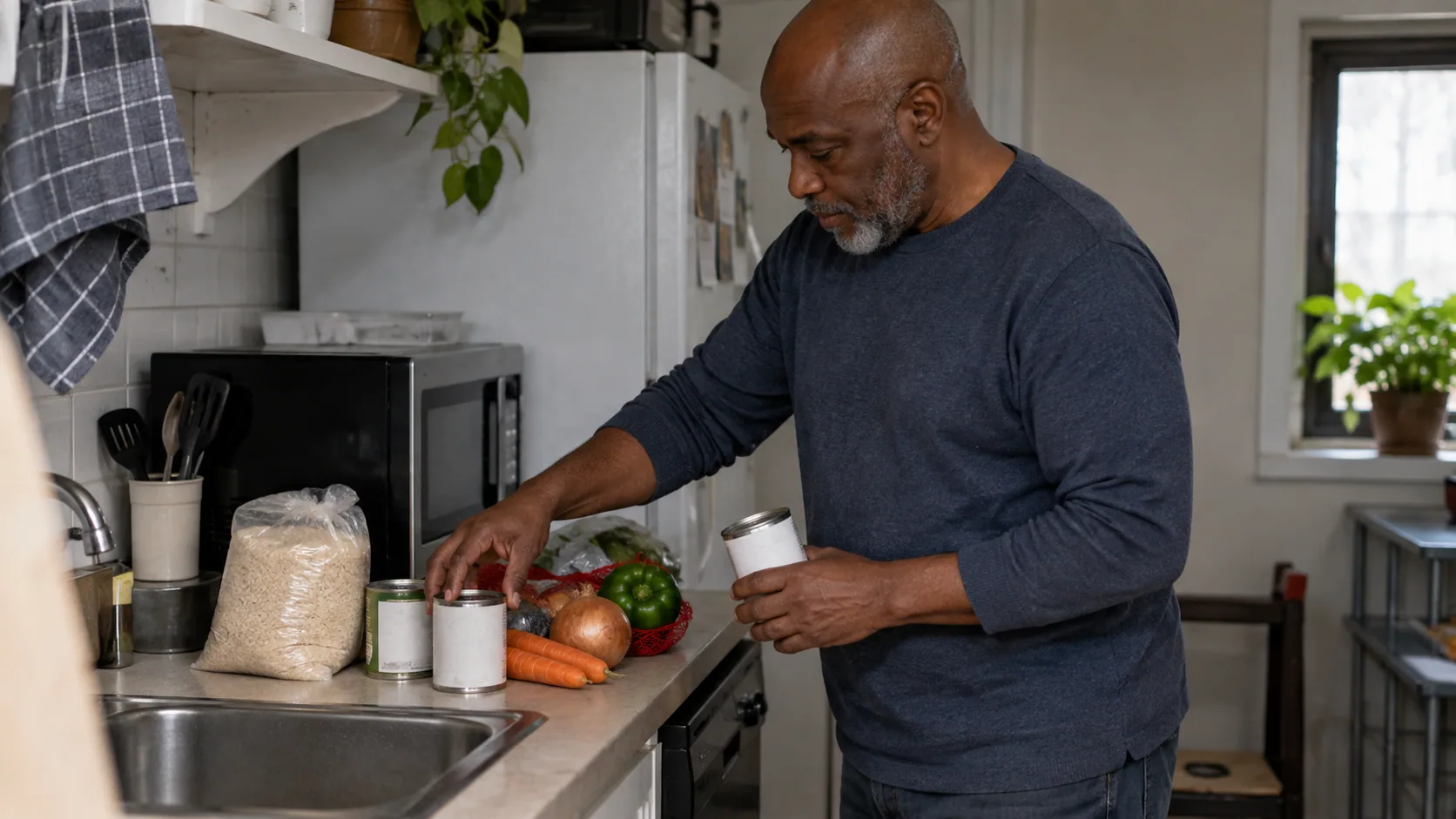
AI-generated editorial image; it does not depict a real person or event discussed in this guide.
Examples in this guide are illustrative, not reported experiences.
SoberSphere provides independent general information, not individual medical, legal or financial advice. No provider referral, affiliate arrangement or specialist review is claimed.