
Find the part that uses the most energy
The difficulty may be deciding what to eat, shopping, standing at a counter, washing dishes or starting a recipe with many steps. Identify the main obstacle before changing the menu. Pre-chopped food will not solve a lack of money for food, and a detailed recipe will not solve an inaccessible kitchen.
If several tasks are difficult, choose an option that reduces more than one. A meal assembled from suitable ready-to-eat ingredients may require fewer dishes and less standing than cooking. The aim is to remove a real obstacle, not prove that one style of preparation is best.
Choose a small set of repeatable options
Write one option for a day when you can cook, one for minimal preparation and one for a day when you cannot prepare food. These are effort categories, not nutritional rankings. Choose foods you can eat safely and are willing to eat, taking account of allergies and any individualized clinical guidance.
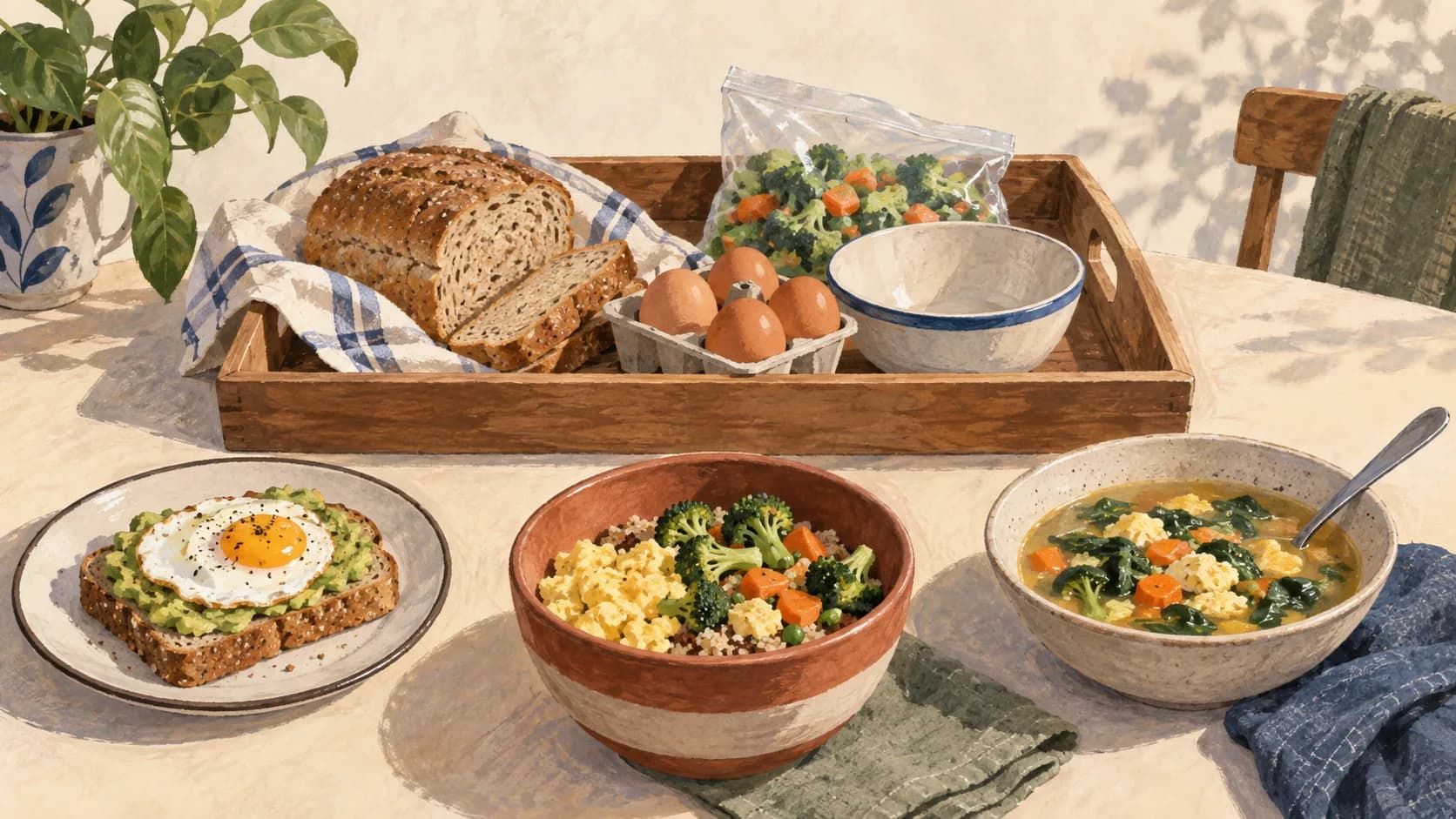
A plan might use a familiar cooked dish on a higher-energy day, an easily assembled meal on another day and a confirmed prepared meal source when cooking is not possible. The exact foods depend on your resources. “Order delivery” is not a backup unless you have the money and service access for it.
Repeat ingredients only where it helps. Variety can be welcome, but a plan that requires many separate purchases and decisions may recreate the problem you are trying to solve.
Put the easiest option within reach
Check what the meal needs besides food: an opener, clean utensils, water, a suitable container or microwave access. Keep necessary items together if your space allows. If storage is shared, agree what belongs to whom so an intended backup is not accidentally used by someone else.
If another person offers help, ask for a defined task such as collecting a grocery order or washing the dishes after dinner. “Help me eat better” leaves the practical work unclear. Confirm whether the help is a one-time offer or something they can repeat.
Use leftovers only with a storage plan
Cooking extra can reduce later preparation, but only if you can safely store and use it. FoodSafety.gov advises prompt refrigeration of perishables and explains handling and cooking requirements. Do not plan a batch of meals around a refrigerator that is unavailable or unreliable.
Label stored food so you know what it is and when it was prepared. Use the applicable storage guidance for the particular food rather than assuming every cooked meal keeps for the same length of time. If safe storage is not possible, make or obtain an amount suited to the meal you can eat now.
Test the plan against a real difficult day
Imagine reaching the point when you usually skip preparation. Is the food already there? Can you open it? Are you depending on someone who has not agreed to help? Change the plan where the answer exposes a missing step.
If lack of energy persists, changes suddenly or interferes with basic needs, discuss it with a healthcare professional rather than assuming meal planning addresses the cause. The plan can reduce practical work while you seek appropriate assessment.
Keep the options where you can find them, on paper if useful. After trying them, retain what was manageable and replace what was not. You are building a usable fallback for meals, not a schedule that has to be followed perfectly.
About this guide
AI-generated editorial image; it does not depict a real person or event discussed in this guide.
Examples in this guide are illustrative, not reported experiences.
SoberSphere provides independent general information, not individual medical, legal or financial advice. No provider referral, affiliate arrangement or specialist review is claimed.