
Define tonight’s job
Find out how many people will eat and when. Ask about allergies and any dietary requirements you need to follow. If household members arrive at different times, plan how their food will be kept safely rather than assuming everyone can eat from a dish left on the counter.
Choose something familiar enough that you understand the main steps. A new recipe can be enjoyable on another occasion, but it may involve ingredients, tools or timing you have not anticipated. If you use a recipe, read it all the way through before deciding it is manageable.
Check the complete ingredient and equipment list
Look at what is actually available, including utensils, safe water and storage. Confirm quantities rather than remembering that you bought something last week. If an ingredient is missing, decide whether you can substitute appropriately, obtain it or choose another meal.
For someone with a food allergy, use the actual package information. The FDA advises reading labels and avoiding known allergens. A substitution must meet that need as well as work in the recipe; do not assume a similar-looking product is equivalent.
Check the cost of missing items and the time needed to get them. A dish requiring a separate shopping trip may be less practical tonight than food you can prepare with what you have.
Put tasks in the order they need to happen
Identify the step that takes longest and any task that depends on another. Then arrange the remaining preparation around it. For a meal, that might mean starting a packaged item according to its directions while preparing a ready-to-eat accompaniment with clean utensils.
Keep the plan short: what starts first, what happens while it is underway and how you will know each part is safely ready. Follow package and food-safety instructions rather than shortening cooking time to make everything finish together.
If someone helps, assign a clear task they can safely do. “Please wash these dishes so we can use them” is more useful than both people moving around the same workspace without an agreed role.
Make food safety part of the sequence
FoodSafety.gov explains cleaning, separating, cooking and chilling. Keep raw ingredients from contaminating foods that will be eaten without further cooking, and use the applicable cooking guidance. Appearance alone is not a substitute for a safe internal temperature where a thermometer is needed.
If the kitchen or equipment cannot support the meal safely, change the meal. Simpler preparation is a practical choice. Do not improvise with an appliance in a way its instructions do not permit.
Finish the whole meal task
Before sitting down, know where any food being saved will go. Refrigerate perishables promptly according to the applicable guidance, and do not plan leftovers if you lack safe storage. Label stored food if that will help identify it later.
After eating, clear the essential utensils and surfaces so the next meal does not begin with the same obstacle. If you are sharing the work, agree who handles that part rather than assuming the cook does everything.
Note the one thing that made the meal easier or harder: too many pans, a missing opener, a portion that did not suit the household. Use that information next time. A repeatable meal is one you can actually organize, prepare safely and finish under ordinary conditions.
Activities from this guide
Your checklist
Read the steps now. A free account lets you save your own checklist.
- 1. Choose one familiar meal or trusted recipe
- 2. Check ingredients, equipment and timing
- 3. Make a list of what is missing
- 4. Decide what to keep for next time
About this guide
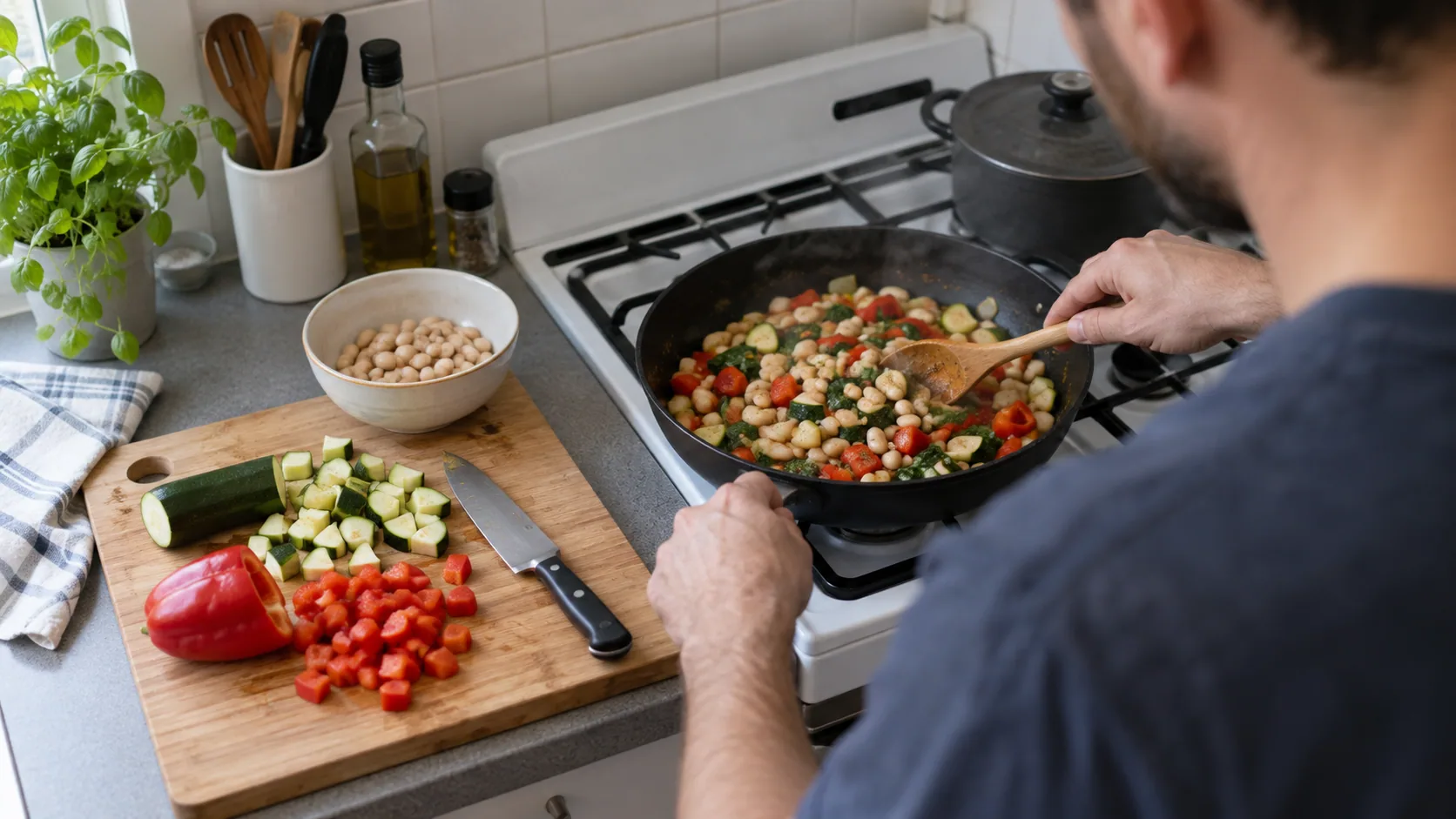
AI-generated editorial image; it does not depict a real person or event discussed in this guide.
Examples in this guide are illustrative, not reported experiences.
SoberSphere provides independent general information, not individual medical, legal or financial advice. No provider referral, affiliate arrangement or specialist review is claimed.