
Look at one spot through the day
Choose a place you are allowed to use and can reach without creating an obstacle. Note when direct sun reaches it, where water would come from and where drainage would go.
A photograph or sketch can help you describe the space, but a phone is not required. On paper, record the approximate dimensions, access and changes in light. Mark anything you have not observed rather than assuming a bright room provides enough direct sun for every crop.
Check tenancy, building or shared-space rules before planning changes. If a balcony, ledge or raised surface is involved, confirm that the arrangement is suitable and secure rather than assuming it can carry a filled container.
Match a plant to the conditions
University of Maryland Extension explains how container crops differ in light, space and water needs. A plant that fits as a seedling may need a much larger container or support as it grows.
Use local extension information or an appropriate garden educator to identify one option suited to your climate, season and measured light. Bring your space note so the answer can be specific.
If you want an edible plant, choose something you actually use. If you prefer a flower or another plant, that is also a valid project. Check the exact plant's suitability around children or animals before bringing it home.
Plan the container and water together
Extension's guidance emphasizes drainage and suitable growing media. Ordinary garden soil is not automatically a good container medium, and a layer of gravel does not fix poor drainage.
Write down the container size and material recommended for your chosen plant, the amount of growing mix needed and how excess water will be managed. Include a stable position where the pot will not obstruct a path or damage another person's space.
Consider the work of carrying water and moving the filled pot. If either is impractical, revise the setup now rather than relying on strength, equipment or assistance you do not have.
Make the full cost visible
List the container, growing medium, seed or plant and any genuinely required support or watering equipment. Separate items already available from items you would need to obtain.
Check whether a borrowed or reused item is suitable rather than assuming free means usable. Do not use a container with an unknown chemical history for food growing.
Set a total you are comfortable spending. If the plan exceeds it, reduce the scope or explore a shared garden opportunity. Do not count expected harvest savings as guaranteed income that pays for the setup.
Test the care arrangement on paper
Write how you would check the plant, water it according to its needs and arrange care during an absence. Follow crop-specific and product instructions if you later plant; this planning page does not supply a universal watering schedule.
A plan might be one suitable herb in a permitted outdoor pot, with a nearby water source and an agreed helper during a trip. If the helper has not agreed, record that as unfinished.
Finish with the selected spot, candidate plant, required setup, estimated cost and decision: continue, revise or wait. If you have no suitable space now, keeping the plan or learning at a community garden is a complete outcome for this first project.
Activities from this guide
Your checklist
Read the steps now. A free account lets you save your own checklist.
- 1. Choose one possible growing spot
- 2. Check light, access and permission
- 3. Find local information about a suitable plant
- 4. Decide whether to continue
About this guide
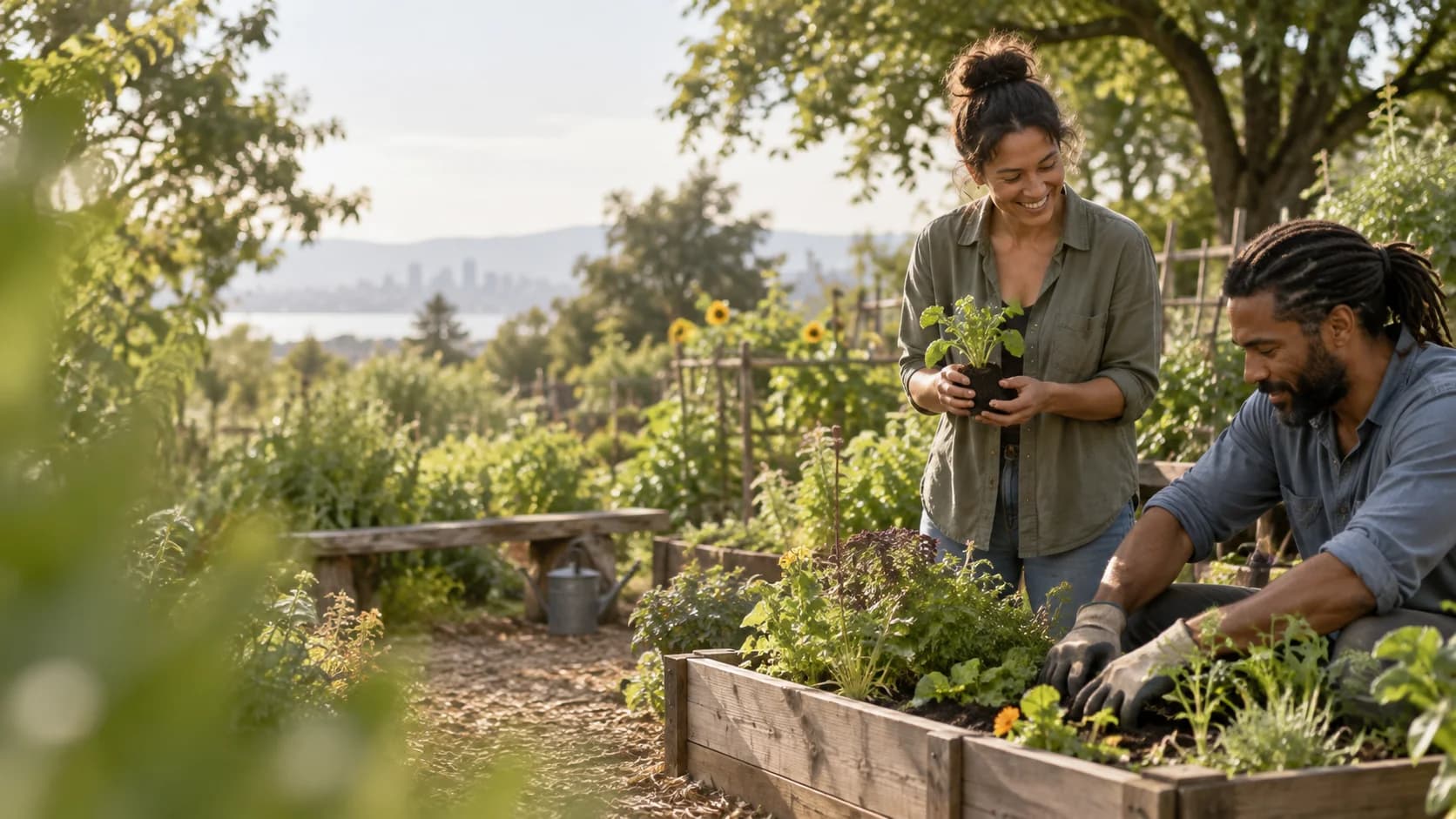
AI-generated editorial image; it does not depict a real person or event discussed in this guide.
Examples in this guide are illustrative, not reported experiences.
SoberSphere provides independent general information, not individual medical, legal or financial advice. No provider referral, affiliate arrangement or specialist review is claimed.